After a storm, “emergency tree removal” can describe very different situations: a tree may be fully down, a large limb may be hanging, or a trunk may be leaning toward a structure. Those conditions do not automatically point to the same scope of work. For a Philadelphia property owner considering Prestige Tree Service, the useful first move is to report what is visible, distinguish immediate hazards from cleanup needs, and confirm what the company can address for the specific site.
The local listing categorizes Prestige Tree Service as an Emergency Tree Removal Service. Its official website lists storm-damage services as well as tree removal, pruning, stump grinding, crane service and cabling. Those published categories help frame an inquiry, but they do not establish real-time availability or mean every damaged-tree situation requires removal.
Describe the condition before asking for removal
Give a concise account of the tree’s present condition: whether it is standing or on the ground, which limbs or trunk sections are affected, and whether anything appears to be touching a building, fence or other feature. Mention whether the condition changed during the storm or was noticed afterward. A clear description helps the conversation begin with the observed problem rather than a remedy chosen in advance.
If there are downed wires, a visibly unstable tree, or limbs suspended over an occupied area, keep people away from the hazard and contact the appropriate emergency or utility service where warranted. Do not approach a tree to take closer measurements or move debris. Photos taken from a safe location can help illustrate the condition, but they are not a substitute for an on-site assessment when one is needed.
Separate urgent hazards from the remaining project
Ask which part of the situation needs attention first and what work is being proposed for that part. A branch blocking access, a split limb above a roof, and a fallen tree across a yard are not interchangeable descriptions. Explain what is blocked or at risk without assuming that the entire tree must be removed. The company’s published service list includes both storm damage and tree removal, but the appropriate scope depends on the conditions at the property.
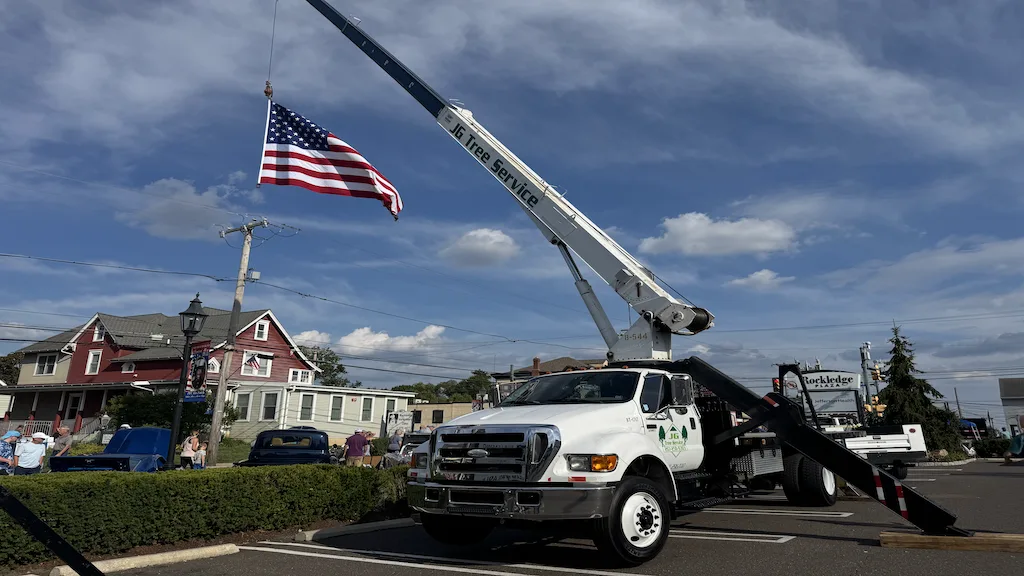
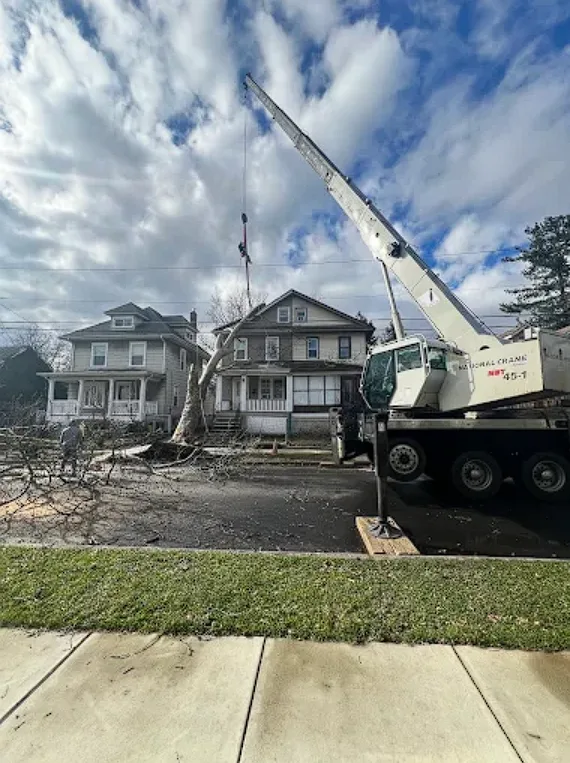
Then clarify what happens after any immediate hazard work. Will the proposed scope address only the damaged limb or tree, or also the remaining trunk, smaller branches and debris? If equipment is needed, ask how the crew expects to reach the work area and whether access constraints could affect the plan. Prestige’s website lists crane service, but that listing alone does not confirm that a crane is suitable or will be used at a particular property.
Make the property and access details concrete
Before requesting a site discussion, note the property address, where the damaged tree is located, and the clearest route from the street to the work area. Describe narrow gates, parked vehicles, overhead obstacles, steep or confined spaces, and nearby structures if they are relevant. These details help identify questions that cannot be answered from a brief service label or a distant photograph.
Prestige Tree Service’s published address is 5635 Tulip St, Philadelphia, PA 19124. That is a useful reference point for identifying the business, not proof of a particular response radius or response time. Confirm directly whether the company handles the property’s location and when it can assess the reported condition. The official website, prestigetreesservices.com, lists its Philadelphia tree-care services and contact information.
Ask where storm work ends and cleanup begins
Tree removal, stump grinding and debris handling can be distinct parts of a project. If removal is discussed, ask whether stump grinding is included or would be a separate service, and identify which cut wood and branches are expected to be removed. Prestige’s official service list includes stump grinding, but that does not establish that it is bundled with storm work. A written description of included work, exclusions, equipment needs and expected sequence can make different proposals easier to compare.
Also ask what conditions might change the scope once work begins. For example, a contractor may need to inspect the damaged tree and surrounding access before confirming the work plan; do not treat a general website description as a property-specific assessment. If several areas are affected, identify each one separately so the discussion does not leave a second damaged tree or cleanup task unaddressed.
Use the first call to settle the next decision
For a direct inquiry, Prestige Tree Service lists +1 215-770-1372. Have the property location, a short description of the damage, safe-to-take photos if available, and any access constraints ready. Ask whether the company can assess the particular situation, what information it needs next, and how the proposed work and cleanup will be defined. Confirm current timing and pricing directly rather than assuming that the emergency-service category promises immediate dispatch or a particular rate.
A focused report does not decide the solution in advance; it gives the tree professional a clearer starting point. Document the visible condition safely, establish which issue matters first, and keep removal, stump work and debris questions distinct. That approach makes the next conversation about the actual Philadelphia property rather than a generic label for storm damage.