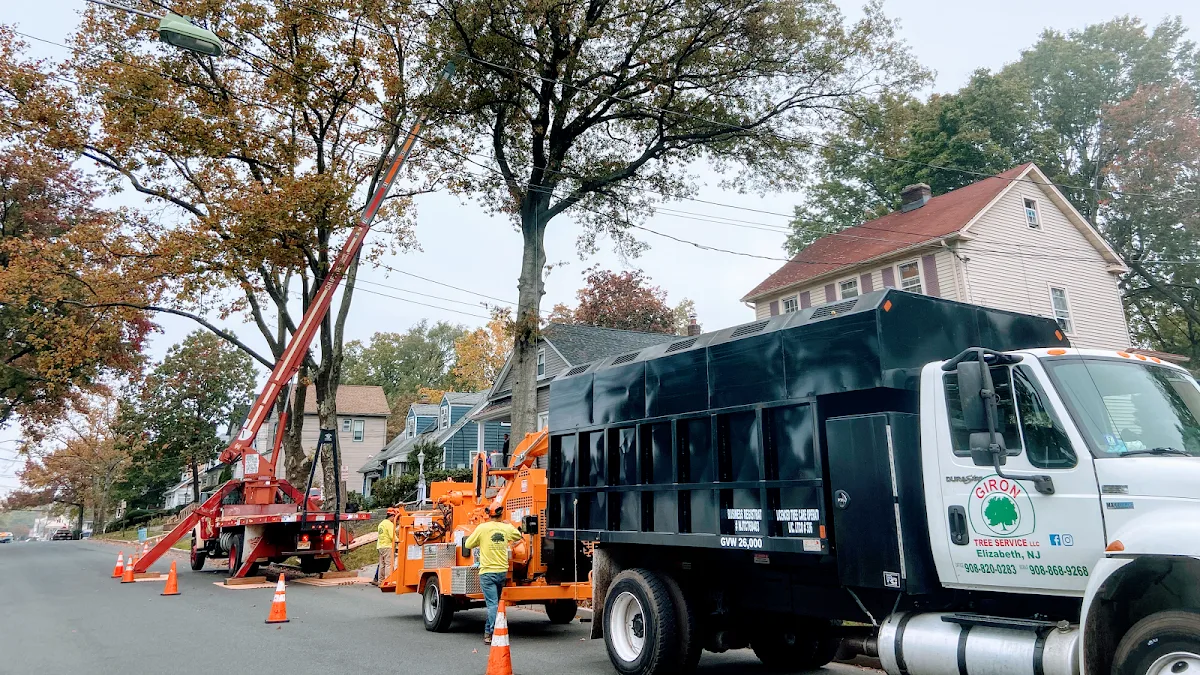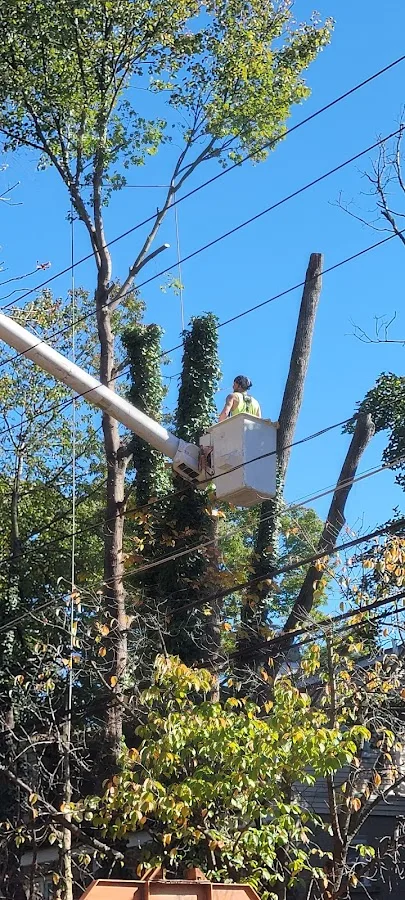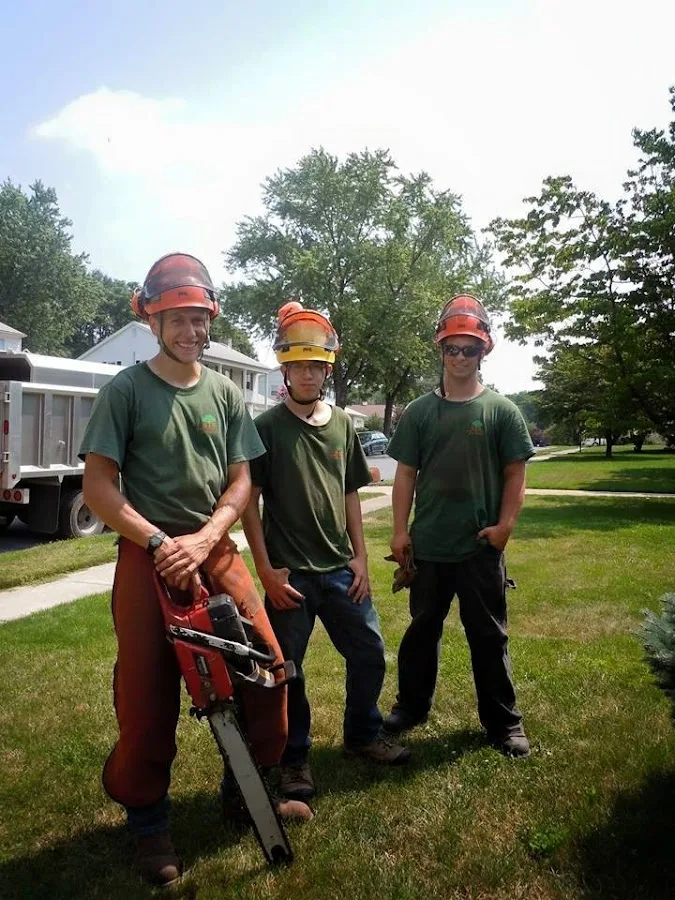
After a storm damages a tree, do not begin with cleanup. First make sure people can stay clear of electrical hazards and unstable overhead limbs. Once there is a safe place to observe from, note what appears to have failed and communicate those details when arranging tree work. The goal is to address hazards without turning an uncertain situation into a close-up inspection or unnecessary cutting.
Make distance the first safety step
Storm damage can leave dangerous conditions that are not obvious from the ground. Downed electrical lines are a clear reason to stay away; nearby telephone or cable lines and even fence wires can become electrically charged when broken electrical lines are present. Do not approach a fallen wire to identify its type or determine whether it is live.
Look up as well as down. A branch hanging in the canopy or caught among other limbs may fall, so do not stand beneath it or try to pull it loose. Stafford Township’s storm-recovery guidance also advises leaving chainsaw work to people who know how to use one.
Describe what failed from a safe vantage point
Storm damage can take different forms: a tree may be blown over, a trunk or branch may fail, the crown may twist, or roots may be damaged. Those descriptions are useful because they tell a tree professional what you can see without asking you to diagnose why it happened. The underlying damage can reflect a combination of tree structure, past maintenance, and climate.
Look for broad, visible clues: whether the whole tree has tipped, whether the trunk or a major limb has broken, or whether the upper crown appears twisted. If you already have binoculars, they can help you see broken branches high in the canopy and cracks along limbs without moving beneath them. Treat these as observations, not as a verdict about whether the tree can safely remain.
For example, if the trunk is still upright but a large branch is suspended in the crown, describe the hanging branch and its position rather than estimating its weight or trying to reach it. If the tree has tipped, say that the tree appears uprooted and note what it is near from your safe position. Clear descriptions are more useful than a guessed technical diagnosis.
Put hazard cleanup ahead of routine pruning
Storm response has a different purpose from ordinary tree shaping. Stafford Township’s guidance identifies hazard removal and cleanup of broken canopy limbs as the primary focus after a storm. That means the immediate question is what damaged material creates a hazard and needs attention, not how to make the tree look evenly balanced.
The same guidance says to remove as little living wood as the situation allows, noting that trees use energy stored in their wood. In practical terms, cleanup should be tied to the storm damage and the risk it creates. Removing sound branches merely to make the canopy symmetrical is a different objective from clearing a broken limb. Keeping those purposes distinct helps explain why the first scope of work may be limited to damaged areas, with other pruning considered separately.
Give the tree service a clear scope
A concise report can help organize an assessment. Identify the tree’s location on the property and report what you observed. Mention whether it has fallen, whether the trunk or a branch has broken, whether the crown appears twisted, and whether a damaged limb is hanging overhead. If you can see the tree from more than one safe angle, explain which view shows the problem most clearly.
For example, “a broken limb is hanging over the driveway” communicates a visible hazard, while “the canopy also looks uneven” describes a separate appearance or pruning concern.
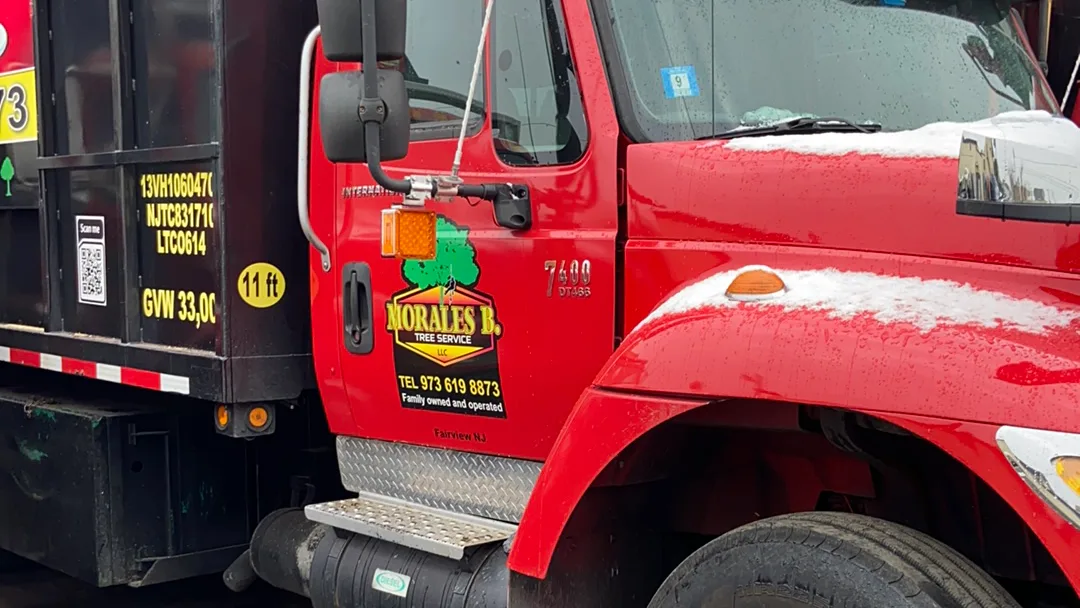
In Jersey City, Morales Brothers Tree Service, LLC is one local tree-service business.