After a storm, the first decision is not always whether to remove a tree. A broken limb, a fallen trunk, a standing tree with visible damage, and debris scattered through a yard call for different descriptions and may lead to different work scopes. AVA Tree Service lists hazardous tree removal, tree trimming, storm cleanup, and forest cleanup, so property owners can use those distinctions to explain the problem and determine whether the company’s stated services match the job. The listing classifies it as an Emergency Tree Removal Service, but the public information does not establish response times or emergency availability; timing should be confirmed directly.
Describe the condition before choosing a remedy
When requesting information, start with what happened and what can be seen from a safe distance: whether the tree is standing or down, which parts are broken, where the debris lies, and what nearby structures or yard features are involved. Avoid climbing, cutting a hanging limb, or approaching a tree that may be unstable. The description helps distinguish a request about hazardous-tree removal from general storm cleanup without assuming that every damaged tree must come down.
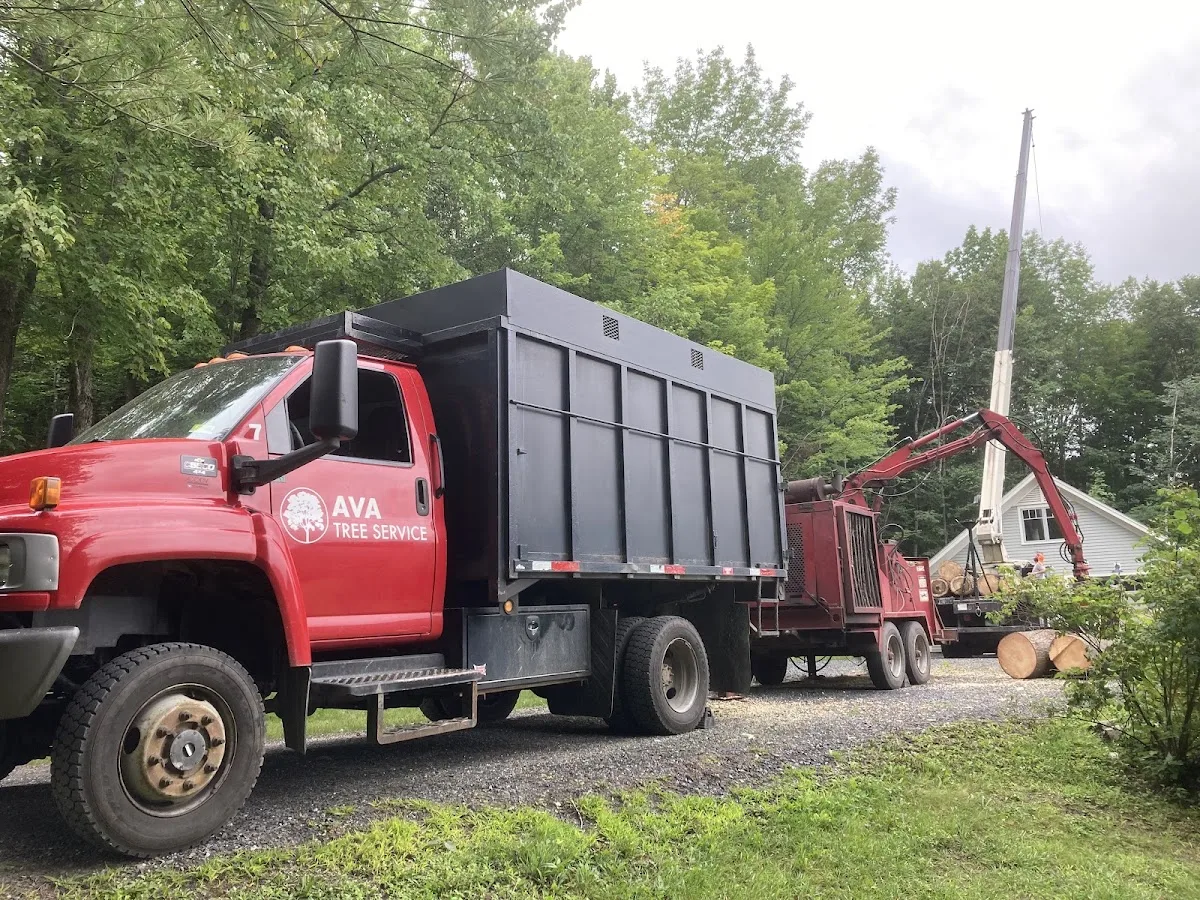
AVA’s official website describes removing blowdowns, snags, and general mess around yards and woods. It also says the company can bring material down, chip it, and haul it away. Those details are useful when debris management is a major part of the problem. Ask which of those tasks apply to the particular site and whether the proposed work covers the full cleanup or only specified material.
Match the request to the work the company describes
The service list provides more than one possible path. Hazardous tree removal and trimming are presented together for concerns about trees looming over a house. Storm cleanup addresses blowdowns and snags, while forest cleanup is described in relation to work around yards and woods. If the concern is not storm damage, but a crowded view or trees encroaching on the yard, the site also mentions view enhancement and removal of understory. These are different project goals, so name the desired result rather than asking vaguely for “tree work.”
For an individual tree near a house, explain what is overhead and what stands nearby. AVA’s website says its work may be performed around utilities, gardens, pools, and outbuildings, with attention to minimizing turf damage. That is a statement about the company’s described approach, not a guarantee about the outcome at a particular property. Ask how the crew would address the specific access route, nearby features, and any visible utility conflicts before agreeing on scope.
Decide whether stump work belongs in the same project
A removal request can leave a separate decision: what should happen to the stump. AVA lists stump grinding and says its self-propelled grinder is used in tight spots; the website describes grinding below grade so the area can return to lawn or be gardened. It also mentions cleanup and topsoil, reseeding, or mulching for affected areas. These are concrete options to clarify, not proof that every package includes them. Ask whether stump grinding and surface restoration are included, optional, or outside the proposed work, and how the finished area is expected to look.
This distinction matters when comparing proposals. One scope might address the standing tree and debris, while another may also include stump work or follow-up treatment of the disturbed ground. Request a written description of the tree or area involved, removal or cleanup tasks, material handling, stump depth if applicable, site restoration, and exclusions. The article cannot determine what a property needs; the scope should reflect the actual site conditions.
Check the service-area and location details directly
AVA Tree Service’s official site says it serves Lamoille County and surrounding areas, and names Morrisville, Stowe, Waterbury, Elmore, Hyde Park, Johnson, Jeffersonville, Worcester, Wolcott, and Hardwick. Its contact information lists 4835 Randolph Rd, Morrisville, VT 05661, United States. A directory category identifies the provider as an Emergency Tree Removal Service, while the company website describes hazardous tree removal and storm cleanup. Because categories and coverage descriptions do not confirm that a specific address is currently within the service area, confirm the property location and requested task before relying on either label.
For current details, the listed phone number is +1 802-585-1551, and the official website is https://www.avatreeservice.com/. Use the conversation to establish whether the company handles the situation, what information or photos would help it assess the request, and what timing is realistic. Do not assume that a listing category means immediate dispatch.
Compare the proposal against the actual site
Before proceeding, make sure the agreed description covers the tree or debris at issue, work boundaries, disposal or chipping, stump handling, access concerns, and any restoration discussed. Ask what is excluded and whether the proposal changes if site conditions differ from the initial description. These questions make it easier to compare providers on the same work rather than on broad labels such as “removal” or “cleanup.”
AVA Tree Service may be worth contacting when the need aligns with its published hazardous-tree, trimming, storm-cleanup, forest-cleanup, or stump-grinding services. The best fit depends on the specific tree, property setting, timing, and written scope. Confirm those details directly before arranging work, especially when storm conditions make access or the condition of a tree uncertain.