A good tree-planting spot is large and suitable enough for the tree it will become. Before planting, compare the selected tree’s mature height and canopy spread with nearby structures, overhead obstacles, underground infrastructure, and the space’s everyday uses. A young tree may fit almost anywhere; its eventual form is the real measure of whether the location will work.
Start with the tree’s mature dimensions
Find the expected mature height and spread for the particular species and, when applicable, cultivar. The label on a young plant may show its size at sale, which says little about the footprint it could occupy years later. Mature-size information is usually presented as a range because growing conditions affect development. Use the range as a planning envelope rather than treating one number as a precise prediction.
Picture the canopy not as a small circle around the trunk, but as the tree’s natural crown at maturity. A broad, spreading tree needs a different setting from one with a narrower upright form, even if both are currently similar in height. Think about where the outer branches are likely to extend in relation to walls, roof edges, fences, paths, and other plants. Crowding a tree into a space that only fits its juvenile shape can lead to persistent conflicts or repeated pruning to keep it there.
For example, imagine a sapling beside a walkway that seems to leave plenty of room. If its mature branches are expected to extend across the path, the question is not whether the trunk fits today; it is whether the future canopy and the path can coexist. A different species or a spot farther from the route may preserve both the tree’s natural form and the walkway’s usefulness.
Check for conflicts above and below ground
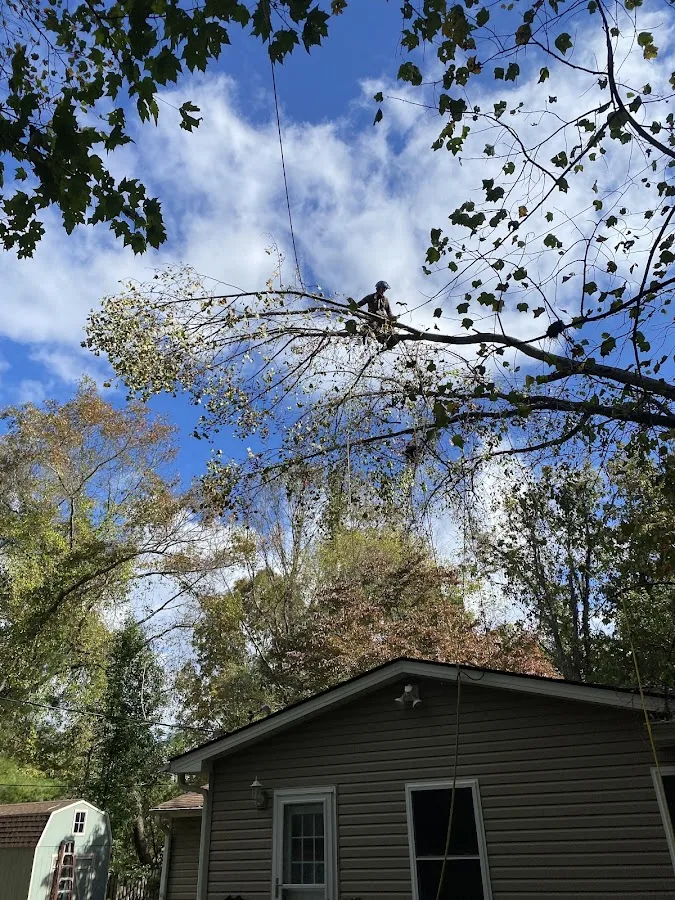
Look upward from the proposed planting point and trace the space the crown could occupy. Roofs, building corners, and overhead wires can constrain a tree as it grows. Compare those obstacles with the mature height and branch shape of the chosen tree, not simply the height of its trunk when planted. If the crown would eventually occupy space that must remain clear, choose a different location or a tree whose mature form suits that space.
Then consider what is below the surface. Paving, foundations, buried pipes, and utility lines can limit where a planting hole can go or where roots may have room. Before excavation, use the appropriate local process to identify buried utilities; do not assume that the visible yard reveals what lies underground. The location also needs enough accessible soil for planting and future care, rather than a small opening boxed in by hard surfaces.
A quick site sketch can make hidden conflicts easier to notice. Mark the trunk location, nearby structures, paved areas, and overhead obstacles, then draw an approximate mature crown. The sketch is not an engineering plan; it is a way to catch obvious mismatches before committing to a tree and digging.
Match the tree to the site’s conditions
Room alone does not make a site suitable. Compare the tree’s growing needs with the spot’s light, moisture, and drainage. A sunny opening may suit a tree that needs strong light but be a poor match for one that performs better with shade. A low area that stays wet can differ substantially from a well-drained slope, while a hot, exposed strip beside pavement may be drier than a nearby garden bed.
Observe the site at different times of day and after ordinary rain. Notice whether buildings or larger trees cast long shadows, whether water tends to collect, and whether the soil dries quickly. These observations help distinguish places that look similar but function differently. If the chosen tree’s needs and the site conditions do not line up, relocating the planting spot—or selecting a better-matched tree—can prevent the mismatch from being built into the landscape.
Also account for seasonal traits where people spend time. Some trees drop leaves, fruit, or other material; some cast substantial shade as their crowns fill out. Consider how those traits would interact with a patio, garden bed, driveway, or frequently used walkway. The goal is not to avoid every bit of maintenance, but to choose a location where the tree’s ordinary seasonal changes make sense for the household.
Test the location against future use
Mark the anticipated canopy area on the ground with a hose, rope, or a few temporary markers. Walk around that outline as if the tree were fully grown. Would you still have the path width you need? Would garden beds, parking, or access to a door remain practical? This simple full-scale check often reveals that a space that looked generous on paper is tight in daily use.
Think through routine activities as well as the final outline. A tree needs room for planting and care, and the surrounding space may need to stay accessible for mowing, watering, or reaching nearby features. If the tree would sit directly where you regularly turn a vehicle, move equipment, or carry supplies, its mature position may make those tasks awkward. Shifting the trunk location a few feet can sometimes solve a layout problem without changing the overall design.
Greenville residents can find contact information for Greenville Tree Co. on its business page.
Make the final choice by checking four things together: mature dimensions, overhead and underground conflicts, growing conditions, and the yard’s future use. A spot is a strong fit when the tree can develop its natural form without taking over space needed for buildings, access, or everyday outdoor activities. If one of those tests fails, revise the location or choose a tree whose adult size and growing preferences fit the site.