The best place to plant a tree is one that can accommodate its mature canopy and roots while still serving a purpose in your yard. A spot that looks spacious beside a small nursery tree may become crowded years later. Compare the tree’s expected dimensions with what is above and below ground, then weigh that fit against the shade, screening, or visual effect you want.
Start with the tree’s mature form and your goal
Use a reliable description of the species or cultivar to find its expected mature height and canopy spread. Those measurements are more useful than the size of the container or the young tree at the garden center. A broad-canopied tree needs room not only for branches but for the shade pattern and drop of leaves, seeds, or fruit. A narrow, upright form may suit a tighter space, but still needs to fit its surroundings as it grows.
Decide what the tree should do before choosing a location. For afternoon shade, consider which part of the yard or building you want shaded and where the canopy could develop to provide it. For screening, think about the view to block and the space the mature tree will occupy. A specimen tree meant to stand out may need visual breathing room; one planted in a useful yard area may need to leave paths and seating accessible.
Species traits also affect everyday placement. Fruit or seed drop can be inconvenient over a walkway, driveway, or patio. Deciduous trees change their shade and appearance over the seasons, while evergreens retain foliage and may screen a view year-round. These are not reasons to reject a type of tree; they are factors to match to the spot and the job you want it to do.
Harrisburg readers can find local information for Snyder Tree Service LLC.
Map the space above ground
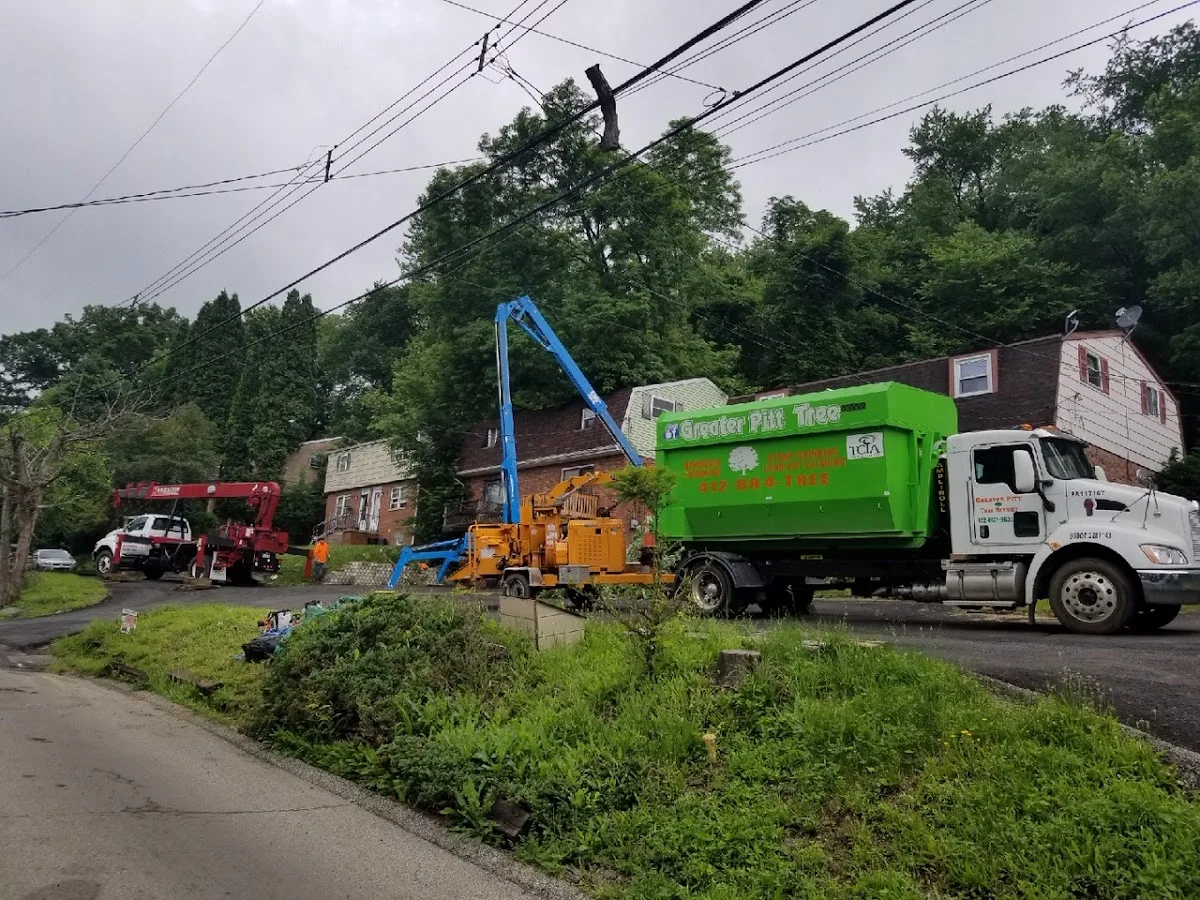
Look up from each candidate planting spot. Note overhead wires, roof edges, balconies, fences, and existing branches, then compare their positions with the tree’s mature height and spread. A tree that clears a roof at planting may later press against eaves or fill a narrow gap between structures. Overhead wires call for particular attention: do not assume that routine pruning will make an unsuitable tree-location match workable.
Trace how the future canopy could affect the way people move through the property. Consider windows, doors, driveways, walking routes, sightlines, and neighboring space. For example, a tree positioned to shade a patio may also shade a window or overhang a path; whether that trade-off is acceptable depends on how the yard is used. Sun and shade patterns matter, too. Buildings and established trees can block light, and the pattern changes as the sun moves through the day and across seasons.
Instead of judging only from one moment, observe the candidate areas at different times when practical. Mark the approximate canopy width on the ground or visualize it using the mature spread measurement. This turns an abstract number into a clearer picture of whether the crown would crowd a driveway, cover a seating area, or leave the intended space open.
Check what lies below the planting spot
Before digging, identify underground utilities and other infrastructure in the proposed area. A clear-looking patch of lawn does not show what is buried there, and underground constraints can rule out a location that otherwise seems ideal. Use the appropriate local utility-location process before excavation, and keep any marked routes in view when deciding where the planting can go.
Roots need suitable soil volume, while pavement, foundations, and other hard surfaces constrain the space available to them. Think beyond the trunk’s planting hole: a tree may eventually occupy a much larger area than the spot it takes up on planting day. A narrow strip between a wall and a driveway may leave little room for root growth or future canopy, even if the young tree fits neatly there. Compare the tree’s expected size with the usable soil area and nearby hardscape, rather than treating the edge of the hole as the edge of the tree’s needs.
Observe how water behaves after rain and whether the soil seems compacted or heavily disturbed. Water that lingers, a slope that sheds it quickly, or dense soil can change which species is suited to a site. The right response is not to assume that every tree prefers the same conditions: check species-specific information about soil and moisture needs against what the location actually offers.
Use a shortlist to make the final choice
Compare candidate spots against the same criteria rather than letting one attractive feature decide the planting location. A small table can expose the trade-offs before you commit:
| Criterion | What to compare | Decision value |
|---|---|---|
| Mature form and purpose | Expected height and spread; shade, screening, or focal-point goal | Does the tree fit the intended use without overwhelming it? |
| Above-ground space | Wires, buildings, paths, windows, and sightlines | Can the canopy grow without a lasting conflict? |
| Below-ground site | Utilities, usable soil area, drainage, and soil condition | Can the site support the tree without excavation conflicts? |
Rule out a spot when a major constraint cannot be resolved by choosing a better-matched tree or moving the planting location. Then compare the remaining sites by the benefit each one provides and the amount of usable space it preserves. For instance, if two areas both fit the mature spread, the better choice may be the one that delivers useful shade without placing fruit drop over a frequently used path.
Before planting, check dependable species information for mature dimensions and site preferences, and match those needs to your observations of the yard. A good location is not simply the emptiest patch of ground: it is the place where the tree’s future form, growing conditions, and intended role can coexist.