A tree removal estimate is useful when it lets you compare the same defined job—not merely two totals. Look for a clear tree identification, a description of the work, relevant access conditions, and written terms for wood, cleanup, stump work, payment, and changes. If one estimate leaves those items vague, its lower price may reflect a narrower scope rather than a better deal.
Match the estimate to the tree and the work
Start by confirming which tree the estimate covers. A property with several trees needs more than a general phrase such as “remove tree.” The document should identify the tree by location or another description that makes it unmistakable—for example, the large tree beside the rear fence rather than simply “one tree.” This prevents a disagreement about which tree was priced, especially if you requested work on multiple trees.
Next, read the scope as an action, not just a label. “Tree removal” might refer to taking down the whole identified tree, while a separate estimate could cover only selected limbs or a limited part of the job. Those are different amounts of work. Check whether the described task includes the full tree or names particular branches, and notice any stated boundaries. If two proposals do not describe the same task, the totals cannot be compared fairly yet.
For example, imagine one estimate names the tree by the driveway and describes removing it, while another says only “tree work.” The first gives you a defined starting point; the second leaves both the target and the work open to interpretation. The useful comparison is not which wording sounds more comprehensive, but whether each document identifies the same tree and intended result.
Check how the site could change the work
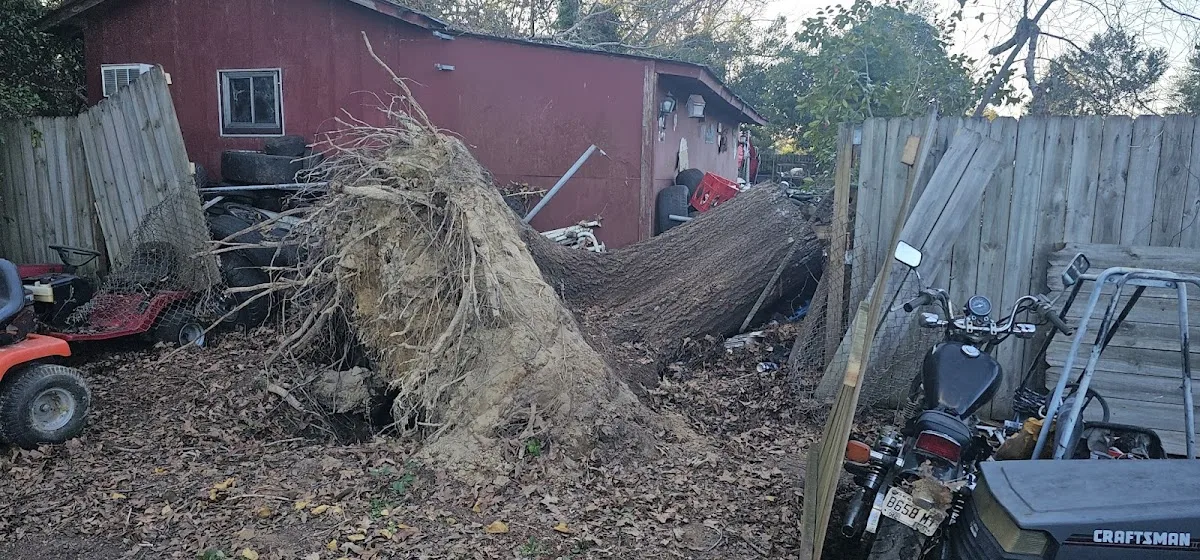
A tree’s surroundings can affect how crews reach it and how the work can be carried out. Read the estimate alongside the actual location: note nearby buildings, fences, driveways, and other obstacles. These details matter because an open lawn and a confined space are not equivalent work areas, even when the tree itself appears similar.
Compare what each estimate says about access and equipment needs. Can machinery reach the work area, or does the site call for a more restricted approach? The estimate need not use a particular technical phrase to be useful; it should make clear which site conditions were considered and what work those conditions are assumed to allow. If you see an important obstacle that is not reflected in the description, raise that specific mismatch before choosing between prices.
Say a tree stands behind a narrow gate, while another estimate appears to assume easy access from the driveway. That difference may affect the planned approach and the work included. The point is not to choose equipment yourself; it is to ensure each price is based on a sufficiently similar picture of the site.
Define what happens after the tree comes down
“Removal” does not automatically tell you what happens to every piece of material. Look for separate wording about the trunk and larger wood: will it remain on the property, be cut into manageable pieces, or be hauled away? A property owner who wants a clear yard may value a different scope from someone who wants usable wood left on site. Making that preference explicit avoids treating an unspecified wood pile as completed hauling.
Branches and smaller debris deserve their own line of thought. Check whether cleanup is included and what the estimate means by that term. A proposal might describe branch removal without saying what happens to larger wood; another might specify hauling. Compare the actual words rather than assuming “clean up” has the same meaning in every estimate.
Stump work should also be identified as included, excluded, or separate. Removing the above-ground tree and addressing the remaining stump are distinct tasks. If you want the stump handled, look for wording that describes that work rather than relying on the broad word “removal.” A separate stump task can then be evaluated on its own instead of disappearing inside an unclear total.
Compare written terms before accepting
Once the job is defined, put the estimates beside each other and classify each important item as included, excluded, or unclear. This simple comparison exposes scope differences before a headline price anchors your decision.
| Item | What to compare | How to mark it |
|---|---|---|
| Tree and task | Same identified tree and same removal scope? | Included, excluded, or unclear |
| Site and access | Are the same obstacles and access assumptions reflected? | Included, excluded, or unclear |
| Wood and cleanup | What stays, what is hauled, and what cleanup is specified? | Included, excluded, or unclear |
| Stump | Is stump work part of the job or a separate task? | Included, excluded, or unclear |
Resolve unclear entries in writing before treating the totals as comparable. Then review the stated payment terms and how a change will be handled if the work required differs from the described scope. The goal is a record that both sides can use to understand what was agreed, not a vague label that leaves key tasks to assumption.
Augusta homeowners can find contact details for Augusta Tree Removal.