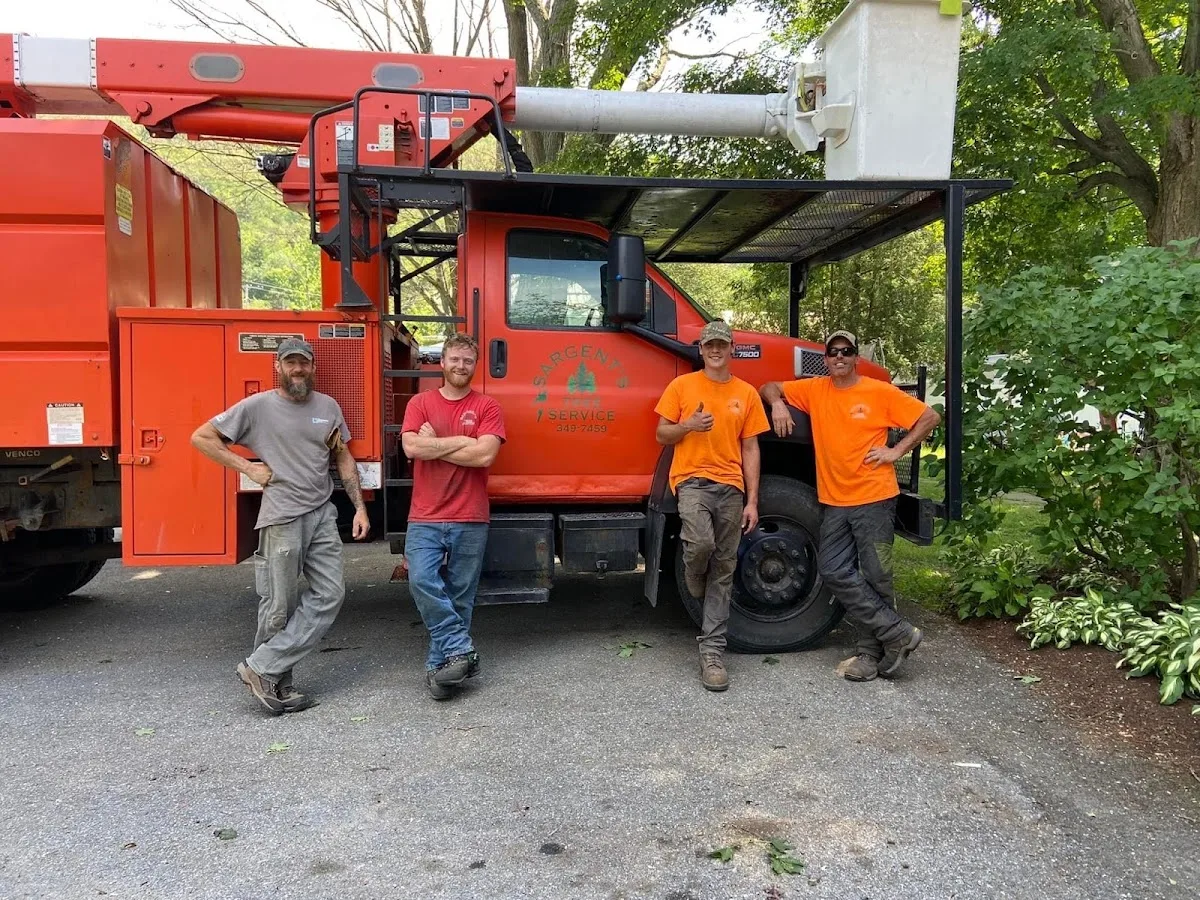
An ash tree that still has a leafy crown can nevertheless raise questions about Emerald Ash Borer (EAB), structural condition, and whether to retain or remove it. Sargent’s Tree Service, LLC identifies EAB among its service topics and says its site can help landowners consider treatment or removal. That makes the useful first step a focused assessment request—not assuming that one visible symptom settles the decision.
Ask what the signs do—and do not—tell you
The company’s EAB page names three signs to look for: a thinning canopy, young branches emerging from the trunk, and D-shaped exit holes in bark or branches. Those observations can help a caller describe what prompted concern, but the page does not say that any single sign confirms an infestation. Nor should a tree that looks healthy automatically be treated as risk-free: the site cautions that an affected ash can appear healthy while being at risk.
Before contacting a tree service, note which signs you can actually see, where they occur, and whether they are changing. If you are unsure whether the tree is ash or cannot inspect it safely, say so rather than climbing or disturbing it. Ask what assessment the company can provide and what evidence would support its recommendation. The goal is to separate an observed symptom from a diagnosis and then understand the choices available for that particular tree.
Separate the tree-health decision from the work scope
The official site frames the EAB issue as a choice between treating and removing an ash tree, and says the company can help with that decision. Its listed services also include tree removal and trimming. Those are related but not interchangeable requests: a concern about infestation asks what is happening and what options are appropriate, while a removal or trimming request identifies a proposed physical task.
When making an inquiry, describe the tree’s location on the property, the visible signs, nearby structures or access constraints, and what outcome you are considering. Then ask whether the visit is intended to assess condition, discuss treatment versus removal, or provide a work proposal. If removal is considered, clarify what the proposed scope includes. For trimming, identify the specific limbs or clearance concern rather than using “tree work” as the entire description. These details make it easier to understand what is being recommended and to compare proposals on the same basis.
Make storm cleanup a distinct request
Sargent’s lists storm-damage cleanup as a separate service topic. Its site describes a range from a fallen tree to a yard scattered with branches and leaves. That range matters when describing a storm call: clearing loose debris is not the same scope as addressing a downed tree or a damaged limb near a building.
Give a concise account of what has fallen or remains attached, where it is, and whether it affects access or is near a structure. Do not approach a hanging or unstable limb to take a closer look. Ask which portions of the reported condition the company is being asked to evaluate and what cleanup is included in any proposal. The public service description does not establish response times or emergency availability, so timing should be confirmed directly rather than inferred from the presence of a storm-cleanup listing.
Decide whether stump grinding belongs in the same project
Stump grinding is another service named on the company site, described in relation to removing an unwanted stump after a tree has been taken down. If a project involves both removal and a remaining stump, ask whether the estimate addresses both tasks or only the tree above ground. The site notes possible practical concerns such as mower damage, tripping, and new growth around a stump; whether those apply depends on the property and the stump’s location.
Be specific about the stump’s position, nearby planting or lawn features, and what result you want from the area afterward. Do not assume that a quote for tree removal includes grinding, or that grinding includes every form of debris or site restoration. A written scope can make the inclusions and exclusions easier to understand before work is scheduled.
Use the listing details to reach the right business
The current record gives Sargent’s Tree Service LLC’s address as 1409 Elder Hill Rd, Lincoln, VT 05443, United States, and lists the business under the Tree Service category. It also gives the phone number as +1 802-349-7459 and points to the company website at http://www.sargentstreeservice.com/. Because the record’s city label and street address differ, verify that you have reached the intended provider and confirm whether your property is within its service area instead of assuming coverage from a broad location label.
A useful first conversation can stay simple: identify the tree or cleanup concern, explain the visible evidence, and ask what kind of assessment or work proposal fits. Confirm the current scope, timing, pricing, and any project-specific conditions directly. That approach keeps the decision anchored in the actual tree and property—and helps distinguish an EAB question from a removal, trimming, storm-cleanup, or stump-grinding request.