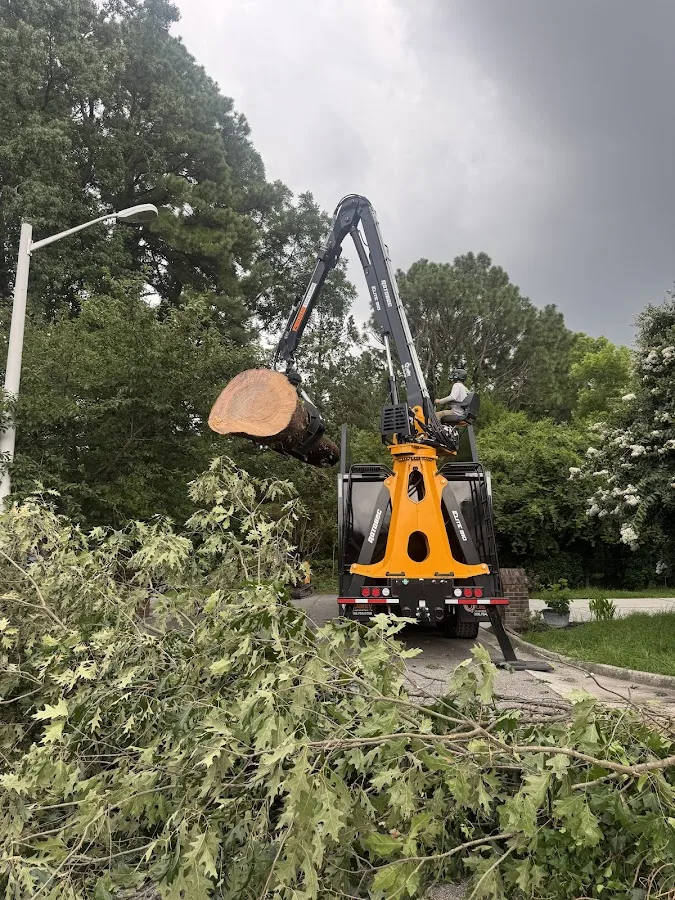
A tree can be damaged by a project that never touches its trunk. Excavation, paving, equipment traffic, and grade changes can alter the soil around roots that help keep a retained tree healthy. The most useful time to address those risks is while the design and work areas can still move: identify trees to keep, map the full construction footprint, and resolve conflicts before crews begin.
Look beyond the trunk to understand the root area
The visible trunk occupies only a small part of the space a tree depends on. Many absorbing roots lie in relatively shallow soil, and roots may extend well beyond the canopy’s edge. The canopy can help you picture the tree’s scale, but it is not an exact underground boundary or a reliable map of every root. A driveway or patio that appears clear of the trunk can still overlap soil used by the tree.
Roots need both space and workable soil conditions. Excavation may sever roots directly, while repeated vehicle passes can press air spaces out of soil and make it harder for water and oxygen to move through it. Raising or lowering the grade changes the soil conditions around roots, even when the change looks like a simple leveling adjustment. A new hard surface can also reduce the amount of exposed ground through which water reaches the surrounding soil. These impacts are different, but each can affect areas beyond the finished edge of a project.
Map construction impacts before fixing the layout
Start by marking which trees are intended to remain, then compare each tree’s surrounding area with the proposed work—not just the final outline of the driveway, patio, or trench. Draw in excavation for foundations, drainage, and utilities; note where paving materials will be placed; and include grading changes. A utility route that seems narrow may still require a wider working corridor for digging and access.
Next, add temporary activity to the plan. Construction vehicles need routes, and crews may need places to stage materials, park equipment, or pile soil. Those areas can create soil compaction or cover ground around a tree even if they are removed when the job is done. For example, a hypothetical patio plan might show no paving beneath a tree, but its access route could send a loaded vehicle repeatedly across nearby soil. Reviewing that route before it is established makes the conflict visible while other options remain open.
Use a site sketch or project plan to make these overlaps concrete. Mark the retained trees, proposed digging, paved areas, travel paths, material storage, and grade changes together. That shared picture helps a homeowner, designer, and construction team discuss the same locations rather than relying on a vague instruction to “be careful around the trees.”
Keep construction traffic and soil changes away from protected areas
Once the work zones are mapped, designate areas around retained trees that should stay clear and make the boundary visible before construction traffic arrives. Barriers can communicate where vehicles, stored supplies, and repeated foot traffic should not go. The appropriate protected area depends on the individual tree, site constraints, and project; there is no single distance from a trunk that suits every situation. A qualified tree professional can help assess a specific tree and site when that judgment is needed.
Keep soil changes in the plan rather than treating them as finishing details. Added soil can cover roots and alter the amount of air and water reaching them; removing soil can expose or damage roots and change drainage. A new paved area near a tree changes how much ground remains open to rainfall. If the design includes any of these changes, identify where they occur and consider whether shifting the edge, adjusting the grade, or changing the surface can reduce the affected area.
Resolve conflicts while the design can still change
When a trench crosses the area around a tree you hope to keep, compare the trade-offs before work starts. Could the route be moved to another side of the yard? Could the design use a different construction approach at the crossing? Would the project’s function still work if the layout changed? Each option has different implications for access, drainage, cost, and the tree, so the decision should be made against the real site plan rather than an abstract preference for retaining every tree.
Imagine a patio whose intended seating area lies close to a valued shade tree. Moving one edge a few feet might preserve more open soil, but the revised layout still needs to provide the access and usable space the household wants. Compare the actual benefit of the shift with how the patio will be used and how water will move across the yard. If retaining the tree cannot be reconciled with the project’s essential requirements, decide that before scheduling work rather than allowing the conflict to be settled accidentally by excavation.
For a neutral directory reference during local project research, see the Queen City Tree Service detail page.