Choosing a tree service is less about finding the broadest list of capabilities and more about matching the company’s documented work to the condition on the property. G’s Friendly Tree Service, LLC presents a particularly focused set of tree-related options: removal for small, large, dead, and fallen trees, along with stump removal, stump grinding, trunk removal, and root removal. That makes the first decision relatively clear: is the property owner dealing with a standing tree, a fallen tree, or what remains after a tree has been cut?
The company’s public listing identifies the business at 68 Woodside St, Manchester, CT 06040, United States, and provides the phone number +1 860-874-3018. A separate database summary labels the location as Manchester, NH, so anyone comparing local providers should confirm the service address and current operating area directly rather than relying on the city label alone.
Which tree problem does the listed scope actually fit?
G’s Friendly Tree Service’s website separates several types of removal instead of treating every project as one generic service. Small tree removal and large tree removal can involve different access, equipment, and property-protection questions. Dead tree removal and fallen tree removal also describe different starting conditions: one concerns a tree that remains standing, while the other begins with material already on the ground.
That distinction is useful when making the initial call. A homeowner can describe whether the tree is upright, leaning, recently down, or already cut into sections. Photos of the trunk, canopy, stump, nearby structures, and access route can make the discussion more precise. The service label should follow the observed condition, not replace it.
Why stump grinding deserves a separate line in the scope
Stump work is not automatically included in tree removal. The official site lists both tree stump removal and tree stump grinding, as well as tree trunk and root removal. Those terms can lead to different finished conditions, so a property owner should ask which option is being proposed and what happens to the resulting wood, chips, roots, and below-grade material.
The site specifically describes stump grinding as work intended to grind a stump to the roots, but the practical result still needs to be defined for the individual property. Before accepting a scope, ask how deep the grinding will go, whether surface roots are included, how the opening will be filled, and whether replanting or lawn restoration is excluded. These questions are especially important when the area will later receive grass, paving, fencing, or another planting.
What the equipment list can—and cannot—tell a homeowner
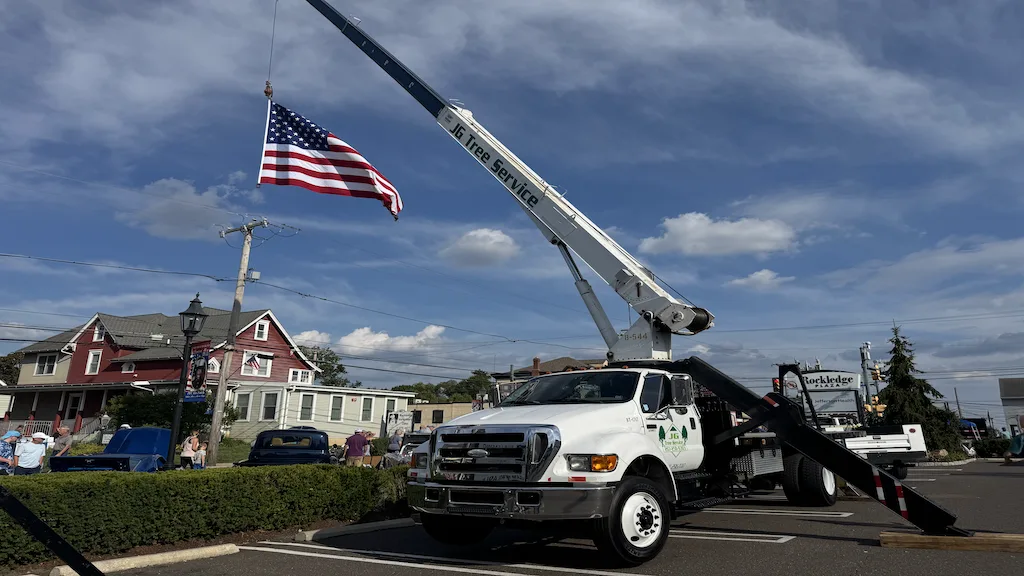
G’s Friendly Tree Service’s website identifies equipment categories including stump grinders, tree chippers, chip trucks, a front-end loader, and bucket trucks. Those details help a reader ask better project questions, but an equipment list does not by itself establish that every machine is used on every property or that a particular access route will work.
Before scheduling, describe driveway width, gates, slopes, overhead lines, parked vehicles, sheds, fences, and the distance from the work area to the street. Ask which equipment the proposed method requires and how the crew plans to protect lawns, structures, and other trees. If the site is constrained, a written explanation of access and debris handling can be more useful than a broad promise that the job is straightforward.
Does the Connecticut address match the job location?
The published address—68 Woodside St, Manchester, CT 06040—should be used as a verification point, not as proof of coverage for every nearby community. The listing data also contains a Manchester, NH reference, creating a location detail worth resolving before a visit is arranged. A caller should provide the full property address, ask whether the company currently serves that location, and confirm whether travel or site conditions change the proposed scope.
The official website is listed as treeservicesmanchester.com. Checking that site and calling +1 860-874-3018 gives the property owner two direct ways to confirm current service details. The website also states that the business has local knowledge and long experience with trees, but those statements should be understood as the company’s own description rather than an independent performance rating.
What the quote should define for this tree or stump
A useful quote request should identify the exact tree or stump, the requested result, the equipment or access assumptions, debris handling, and any work that is not included. Ask whether the quoted scope covers only cutting, or also hauling, chipping, stump grinding, backfilling, and cleanup. For a fallen or hazardous tree, describe what is touching the ground and what remains supported or suspended; do not assume that “removal” covers every related piece of cleanup.
G’s Friendly Tree Service may be worth considering when the project aligns with its publicly listed Tree Service focus and the property owner can clearly describe the needed removal or stump work. The best next step is not to choose a service name from a menu, but to confirm the Connecticut address, current coverage, equipment plan, and finished result in writing before work starts.