A tree emergency is not a single kind of job. A fallen trunk across a driveway, a split limb suspended over a roof, and a damaged tree still standing each raise different questions about access, immediate risk, equipment, and cleanup. Executive Tree Care identifies emergency tree service among its offerings, but a listing alone does not establish response time or whether a particular situation can be handled immediately. A useful first step is to describe the condition clearly and ask whether the company can assess that specific site and scope.
Describe the hazard before choosing a service label
When contacting a tree company, distinguish what has happened from what outcome is wanted. Note whether the tree is standing, leaning, broken, or already down; identify any limbs hanging overhead; and say whether the tree or debris is touching a structure, blocking access, or near visible utility lines. Avoid approaching or attempting to move unstable limbs. If there is an immediate threat to people or an active utility hazard, keep clear and contact the appropriate emergency or utility service rather than treating a contractor call as the safety response.
Photos taken from a safe distance can help communicate the situation, but they do not replace an on-site evaluation. Ask whether the initial request is for emergency storm-damage work, removal, or another service, and what information the company needs to decide whether the job is within scope.
Executive Tree Care lists several distinct kinds of tree work
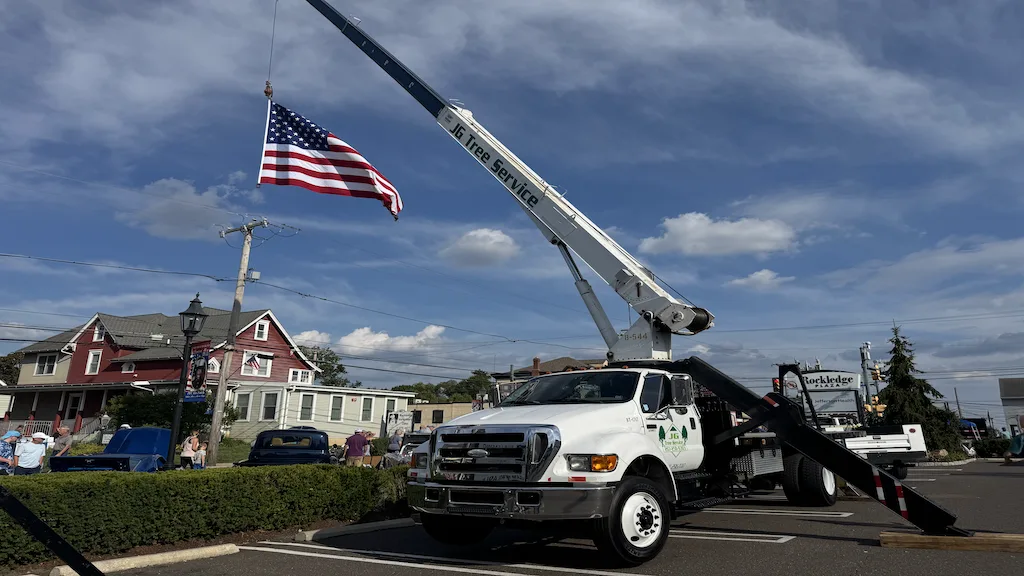
The company’s published service information includes tree removal, emergency storm damage, tree trimming and pruning, stump grinding, and crane removal. Those are useful signals for forming a focused inquiry, not proof that every service is suitable for every property or available at every hour. A standing damaged tree may need a different plan than a tree already on the ground; stump grinding is a separate consideration from removing the above-ground tree.
Ask the representative to state which tasks are included in the proposed work. For example, clarify whether the described scope covers cutting and lowering the tree, hauling branches and trunk sections, stump grinding, or only a portion of that sequence. If a crane is being considered, ask what site conditions and access requirements would affect its use. These questions help prevent the word “removal” from concealing different expectations about equipment and cleanup.
Access details can change the practical scope
Before a site visit or quote discussion, gather details that can be checked without entering a hazard area: the address, where a crew could park, gate or driveway restrictions, nearby structures, and whether the tree is in a rear yard or other constrained space. Mention fences, narrow passages, overhead obstacles, and anything that may limit equipment positioning. If the property is shared or managed, identify who can authorize work and whether access needs coordination.
Executive Tree Care’s listed address is 818 Elmwood Ave, Sharon Hill, PA 19079, United States. That is a useful reference point for verifying the business and explaining the property location, but it does not by itself confirm service availability at a particular address. The listing categorizes the company as an Emergency Tree Removal Service, while the business’s broader service information includes other tree-care work. Confirm directly that the team handles the requested job at the property in question.
Get clarity on timing, debris, and the written scope
Because “emergency” can mean different things to different callers, ask whether the company can respond to the current condition and what timing, if any, it can confirm. Do not assume that the category label means round-the-clock dispatch or guaranteed immediate arrival. If the situation is not actively dangerous, ask whether the company recommends an assessment before deciding between removal, pruning, or another approach.
Before authorizing work, request a written description that separates the tree work from hauling, stump grinding, and any additional cleanup. Ask what the quoted amount covers, what is excluded, whether site conditions could change the scope, and how any change will be approved. If more than one option is proposed, compare the included tasks rather than relying on a broad service label. A clear written scope makes it easier to understand what will remain on the property afterward.
Use the first call to resolve fit, not assume it
Executive Tree Care can be reached at +1 484-451-8900, and its official website is https://www.executivetreecare.com/. A concise inquiry can include the property address, the tree’s current condition, nearby hazards, access constraints, and the outcome needed. Ask whether the company can evaluate that situation, what information it needs next, and which parts of removal or cleanup it would include. Confirm current availability, pricing, and any site-specific requirements directly before making arrangements.
The strongest decision is not necessarily to request the most extensive service. It is to match the documented condition to a clearly defined plan, understand what the work does and does not cover, and keep people away from unstable trees while the situation is assessed. Those steps make an emergency-tree-removal conversation more precise without assuming a response promise or a solution before the site has been reviewed.