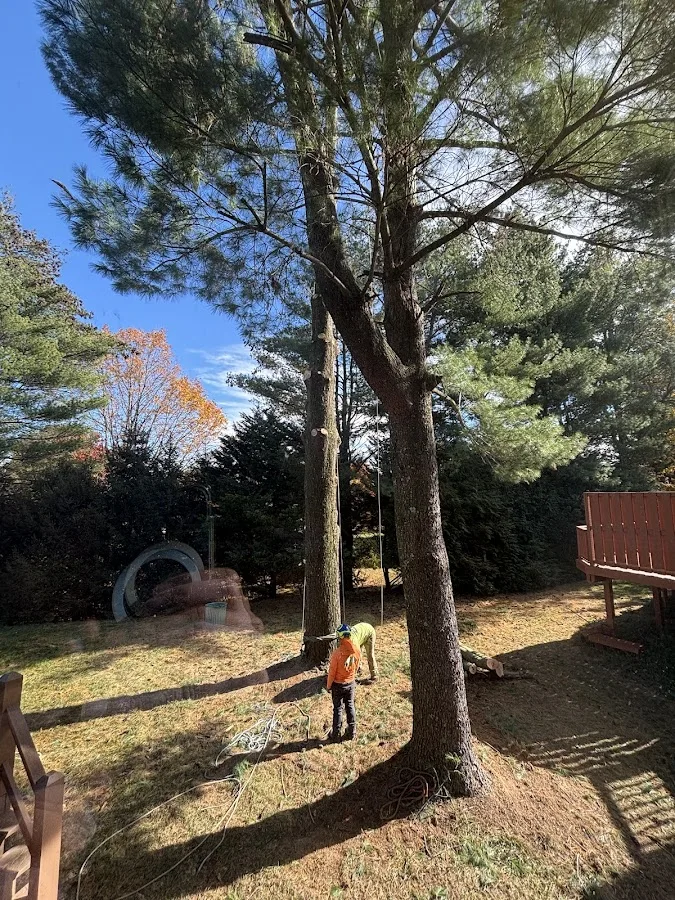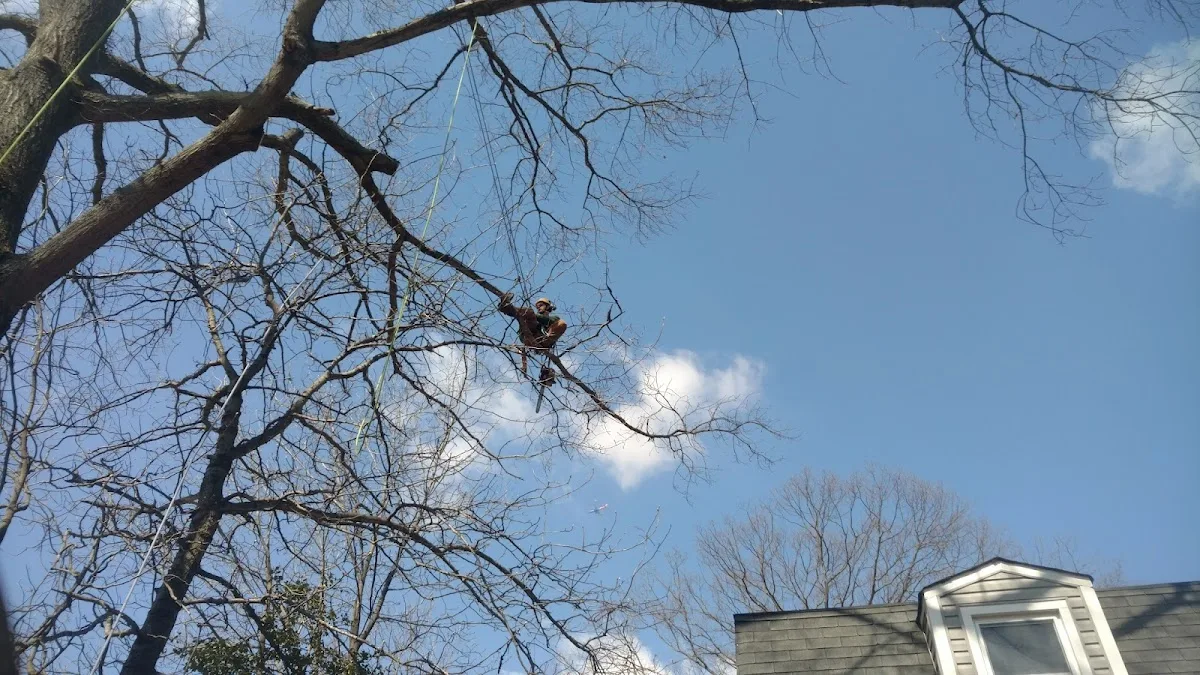
A homeowner might consider cabling or bracing when a tree has a particular structural weakness and retaining it is still part of the decision. These methods may reduce risk at selected weak points, but they do not eliminate the possibility of failure. The useful question is not simply whether a tree looks weak, but what concern a support system is meant to manage, whether the tree is otherwise a suitable candidate, and what the consequences of failure would be.
Understand what support systems are for
Support is considered for a defined structural concern, such as a weak union where two stems or branches meet. Its purpose is to help manage movement or loading at that point while retaining the tree.
Support is not a repair for decayed or otherwise unsuitable wood. Purdue Extension notes that poor health or decay can make a tree ineligible for a support system. A visible crack or awkward branch angle can prompt an assessment, but appearance alone does not identify which system, if any, fits. The observed concern should be tied to a specific reason for retaining and supporting the tree.
Cabling and bracing do different jobs
Purdue Extension describes cabling as a flexible connection that helps limit movement and transfer weight from a weak union to a stronger part of the tree. The guidance also describes dynamic systems that use synthetic rope rather than drilled-in hardware. The word “cable” alone does not explain where support is needed or why that approach fits the tree.
Purdue Extension describes brace rods as threaded rods installed through weak unions to provide more rigid support and reduce spreading or sideways movement. Because rods and flexible cables act differently, they are not interchangeable options selected by preference. The choice depends on the structure being addressed, not a rule that every split needs the same hardware.
Judge the tree and its setting together
The same apparent weakness can matter differently in different locations. Consider what lies beneath and near the tree: a little-used open area presents different consequences from a branch over a frequently occupied patio, driveway, or play space. This context does not diagnose the tree or determine the hardware. It helps clarify the practical risk the owner is trying to manage and how much importance to place on retaining the affected part.
The whole tree matters as well as the visible union. Its overall condition, the extent and location of the structural concern, and the tree’s surroundings all inform whether support is a reasonable option to discuss. For example, imagine a homeowner notices a narrow union above an area used every day. The useful next step is not to choose cable from a picture; it is to ask what the observed structure means, what support could address, and whether a different scope would better manage the concern. This is a hypothetical decision, not a diagnosis of any particular tree.
Make the evaluation lead to a clear work plan
A useful discussion should identify the specific concern, explain why cabling or bracing is being considered, and describe what the proposed method is expected to manage. Ask what alternatives were considered, including work that reduces the affected branch or stem, or removing the tree if retaining it is not a suitable choice. The point is not to prescribe one outcome in advance; it is to understand the reasoning behind the scope.
Also clarify what follow-up the system may require. Ask how the support and the tree’s condition should be checked over time, what changes would prompt another evaluation, and who will explain those needs. A proposal is easier to compare when it identifies the support’s location and sets out any agreed inspection or maintenance expectations.
For local business information, view Annapolis Tree Company’s directory page.