If you’re dealing with a leaning trunk, branches over a sidewalk, or an old stump you’d like to reclaim, the biggest cost risk is usually not the price—it’s an unclear definition of what “done” means. For Brooklyn homeowners and property managers calling Family Tree Service Inc., the goal of your first conversation should be to make the work measurable: removal vs. pruning, whether stump grinding is included, and what the property should look like after cleanup.
This guide is written to help you translate a visual tree problem into a scope that can hold up in a quote and a final walkthrough. It uses the company’s published service categories—tree removal, tree pruning, stump removal, emergency tree service, firewood delivery, and certified arborist services—as a foundation for your questions.
Start with the right problem statement: hazard, maintenance, or both
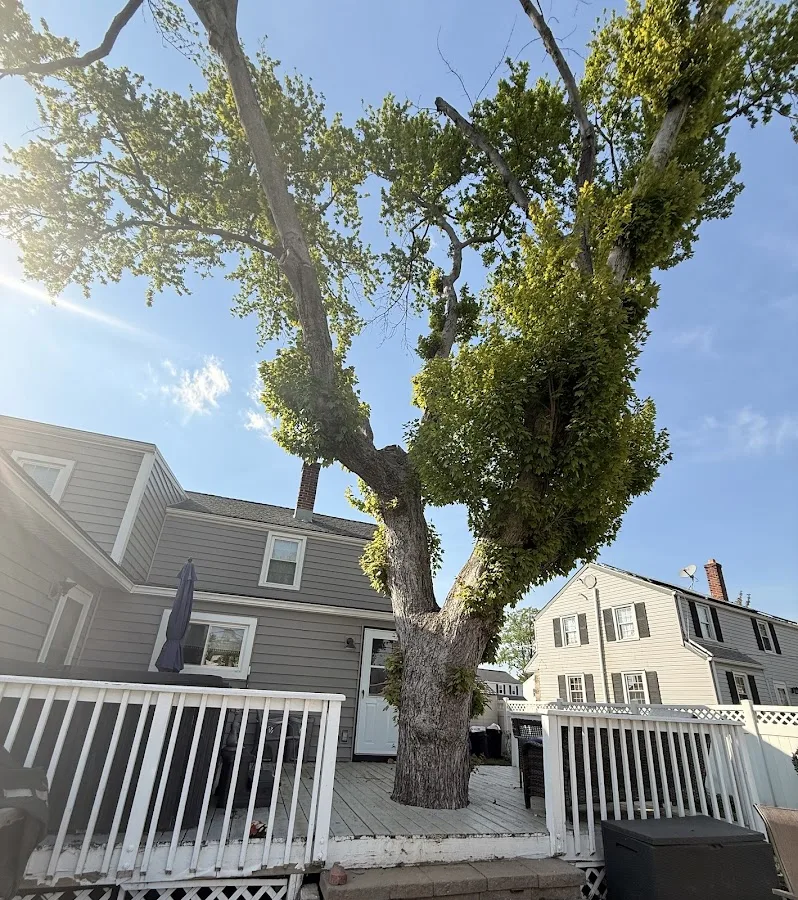
Before you call, decide which bucket your situation fits best, because it changes the plan. If a tree is dead, cracking, pushing into a fence, or hanging dangerously over a driveway, you’re asking for a hazard-focused removal approach. If the tree is healthy but overgrown, you’re usually looking at pruning for clearance and structure. If you’re seeing both—like branch decay plus an outdated stump—your scope may need to combine removal/pruning with stump work.
Define “done” in cleanup terms, not just cutting terms
Many quote mismatches happen when “done” is described as tree removal instead of the final property condition. Ask for a cleanup outcome you can verify. For example: will the crew remove branches and debris from walkways, and will they leave a clear area around the stump location? If the stump will be ground, confirm whether the work includes the remaining root material and how the area will be finished afterward.
Family Tree Service Inc. lists both stump removal and tree pruning, so you can (and should) separate those line items in your request. When you do, the quote is less likely to treat stump work as an “extra” after the main cuts.
Match the service type to what you actually need
Tree removal scope: what to remove, what to leave
If removal is the goal, specify whether you need full removal or selective removal (for example, taking down a section that’s causing the hazard). Your description should reference nearby risk points like the edge of a driveway, a roofline, or a sidewalk line. You don’t need arborist jargon—just be concrete about the space the tree is affecting.
Pruning scope: clearance targets and structural goals
If pruning is the priority, describe clearance concerns. If branches are brushing a roof edge, blocking a light fixture, or interfering with access, tell the contractor the functional target (clear access, safer spacing, or reduced overhang). Pruning can be sold as “trim,” but you’ll get a better job definition when you explain the practical reason you want it changed.
Stump work: removal vs. grinding expectations
When a stump is part of the plan, don’t assume it’s included. Ask whether the stump portion is removal only or includes grinding, and confirm what “finished surface” means for your yard or walkway. That one detail often affects both time and final appearance.
Use the published contact facts to confirm details and routing
If you want a fast, grounded call, use the company’s public contact information as your reference point. Family Tree Service Inc. lists a Brooklyn contact phone number, +1 718-698-2725, and an official website at http://www.familytreeserviceinc.com/. Their business address is listed as 2051 E 68 St Suite 1, Brooklyn, NY 11234, United States. You can use these to verify you’re speaking with the right business and to ask whether your specific site conditions will change the recommended scope.
What to ask on the call so the quote doesn’t drift
To keep scope aligned from estimate to final walkthrough, aim for answers to these points: (1) whether the request is removal only, pruning only, or a combined scope; (2) whether stump work (and cleanup) is included; (3) what the final property condition should look like around the work area; and (4) whether access constraints will affect the method or timeline.
When you define “done” up front—especially cleanup and stump expectations—you’re more likely to get a quote that reflects your real outcome, not just a list of tasks. That’s the most reliable way to protect your budget and get the yard back in usable condition after the job.